2nd Week of Advent, Thursday

To understand the momentous revelation Our Lord makes today for his listeners we have to imagine what it was like to hear prophet after prophet promise, generation after generation, century after century that the Messiah was coming, only to have to keep waiting. Today Our Lord tells them, and us, that the wait is all but over: John the Baptist is the last prophet, the prophet who would come as a new Elijah right before the arrival of the Messiah. A promise made through the prophets for centuries is about to be fulfilled in Jesus.

In Advent we celebrate that long wait drawing to an end, but also that events are about to take a dramatic turn for the better. When Our Lord describes John as least in the Kingdom of heaven, he is telling us that if we considered John blessed to be a prophet with a special mission and relationship with God, we would be even more blessed if we believed in Our Lord and formed a part of his Kingdom, a Kingdom he’ll inaugurate with his incarnation and birth.

Advent is a time to help us grow in joyful expectation and hope. Let’s ask Our Lord for a great faith that his promises will be fulfilled in our lives if we believe in him. Let’s ask for his blessings as we prepare for Christmas.

Readings: Isaiah 41:13–20; Psalm 145:1, 9–13ab; Matthew 11:11–15.

2nd Week of Advent, Wednesday

In today’s Gospel Our Lord invites us to learn from his example be being meek and humble of heart as a way to find rest for our souls. We see this epitomized in that empty manger we’re contemplating during the Advent season. We know the newborn Jesus is rarely depicted as crying or fussy, but we also know the humble beginnings he wished for his earthly ministry. He didn’t pick a royal family or a palace in which to take flesh, but the lowly Mary aided by the quiet and gentle St. Joseph. As human he started as a child like everyone else; as God he decided to start the work of our redemption in a childlike way.

Advent is a season that often softens our hearts, and in a world that seems harsh and cruel, softening your heart doesn’t seem the realistic or practical thing to do. In those moments where we’re tempted to exchange brusqueness for brusqueness, snide remark for snide remark, harshness for harshness,  or temper tantrum for temper tantrum we have to remember how many situations are defused by meekness and humility of heart in response. Hearts often soften and warm when an infant is brought into a room, and meekness and humility can often have the same effect.

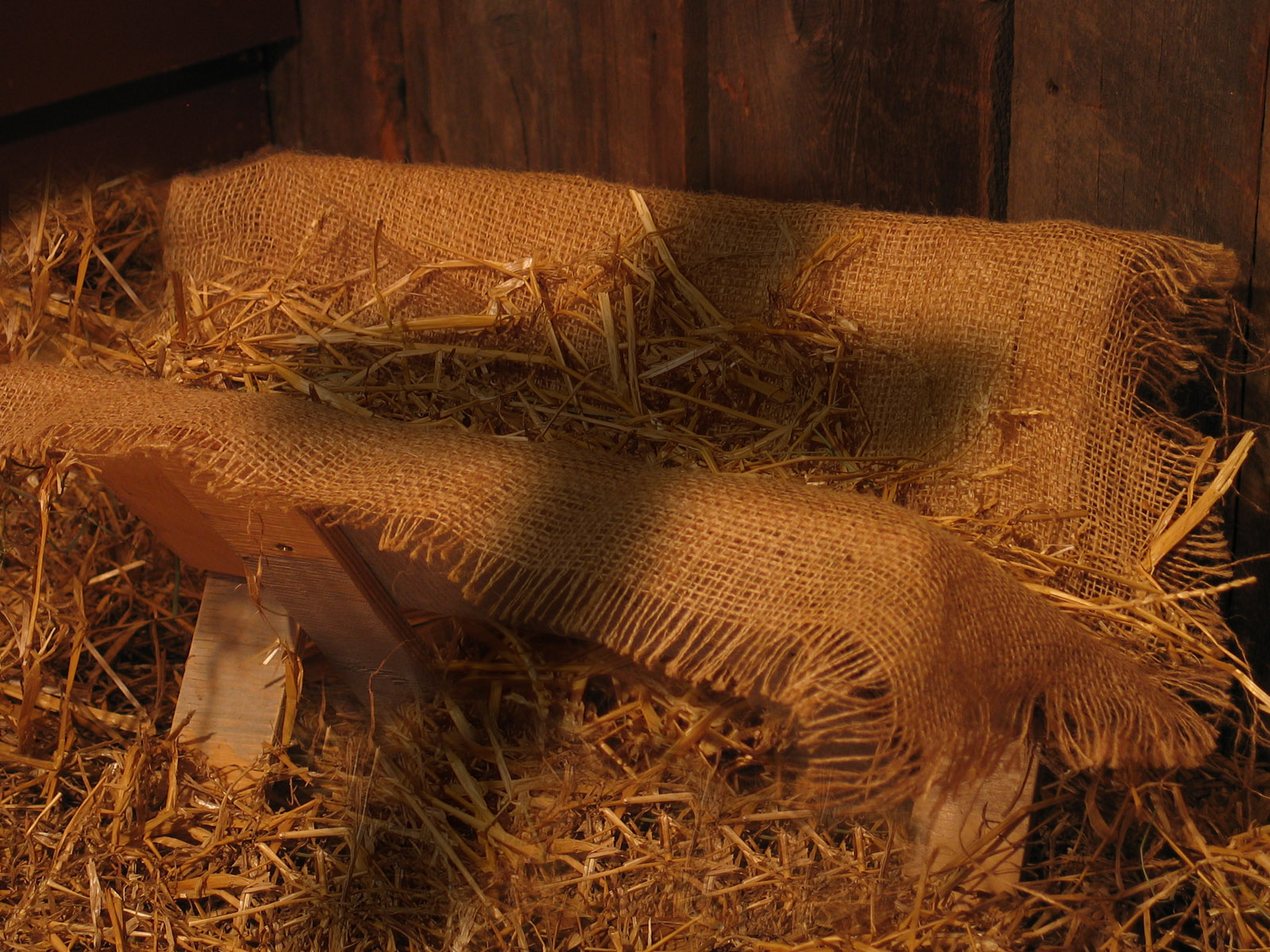
If you have a stressful moment, consider the manger today, occupied or unoccupied, and it will help you be meek and humble of heart.

Readings: Isaiah 40:25–31; Psalm 103:1–4, 8, 10; Matthew 11:28–30. See also 15th Week in Ordinary Time, Thursday.

Solemnity of the Immaculate Conception

The First Reading recalls God’s first encounter with Adam and Eve after they’d fallen. Addressing the serpent, God warned that there would be enmity between the woman and the serpent, and between her offspring and the serpent’s offspring. It was a reminder of the battle that followed after the Fall. However, it was not just a dire prediction: it is also a promise of future salvation, which is why this passage is often called the proto-Gospel. Christians through baptism, prayer, the sacraments, and a morally good life pass from the serpent’s side of the battle to the side of the woman’s offspring: we pass to Jesus and Mary’s side, we become Mary’s children. Mary by a special grace remained on the good side from the beginning, through a special grace that was won by her son’s death. The First Reading reminds us that we must take sides as well in the great battle between good and evil in the world: we must take Jesus and Mary’s side. The battle is lifelong and never easy, but God has special graces in store for everyone who keeps fighting it. The battle has already been won by Christ’s sacrifice on the Cross and Resurrection.

The Second Reading is a dense but rich recap of God’s dream for every human being: before the foundation of the world God had chosen us to be holy and without blemish before him, and out of love he destined us to become his children through his son. He wants to rain his favor down on us through our living a holy and unblemished life, because he knows that it will bring us the truest and fullest happiness. Mary reflects that in her whole life. Mary received that special grace of being preserved from the stain of original sin, her Immaculate Conception, and she made that grace bear fruit by never sinning her whole life, which is why she of all the creatures created by God is his greatest “success story.” It is a hope that God has had for each of us before the foundation of the world, even before the Fall: simply that we love him, not just as creatures, but as his children. He puts all the means at our disposal to do it. Hope is the key: this gift he’s given us will only fully be revealed in Heaven. We live for quick results in society today, but we also know that when we work and struggle for something more lasting it is that much more satisfying. Our life is one big adventure of this, with God helping us.

In today’s Gospel the angel Gabriel comes to Mary and tells her God wants her to be the mother of the Messiah, Israel’s long-awaited savior, and also the mother of God himself. In response to this invitation, Mary gave what would always be known as her fiat (Latin for “May it be done”: see Luke 1:38). Mary was faithful to that fiat her whole life: when Joseph considered leaving her, when she had to give birth in a stable in Bethlehem, when they fled to Egypt, when Jesus was lost in Jerusalem, when she lived with him for thirty years in Nazareth before he began his public ministry, and when he asked her to be the mother of the whole Church from his cross. If the Second Reading reminded us of God’s dream, the Gospel reminded us of what our dream should be in response: that we be faithful to God’s plan for our lives from start to finish.

As we celebrate today Mary’s fiat as crowning her fidelity to a grace received upon her conception in her mother’s womb, let’s also ask Our Lord, through her intercession, to make our whole lives one continuous fiat as well.

Readings: Genesis 3:9–15, 20; Psalm 98:1–4; Ephesians 1:3–6, 11–12; Luke 1:26–38.

BVM

2nd Week of Advent, Monday

In today’s Gospel Our Lord reminds us what a great grace it is for us to receive forgiveness through the mediation of others. When the scribes and Pharisees in today’s Gospel are shocked that Our Lord would presume to forgive sins, Our Lord doesn’t keep silent as if to maintain the secret that he is God; rather, he uses the healing as a sign that the Son of Man has authority “on earth” to forgive sins. When we leave the confessional we have the relief of knowing that if we’ve made a good confession we’re forgiven: it’s the first day of the rest of our spiritual life. The challenges don’t go away, but we know we can make a fresh start.

Our Lord doesn’t just want to dispense his mercy in eternity; God has opened the “roof” of history and arranged for those paralyzed by sin to receive the help they need to encounter his Son and be forgiven. During Advent we remember that Our Lord doesn’t come to condemn us, but to forgive us. We rejoice because we are forgiven and loved by God.

A special time of mercy has begun with Advent; let’s rejoice that our forgiveness it at hand, and help others draw closer to the fount of mercy as well.

Readings: Isaiah 35:1–10; Psalm 85:9–14; Luke 5:17–26. See also 13th Week in Ordinary Time, Thursday.

icon-liturgy-purple

2nd Sunday of Advent, Cycle C

Advent is a time of penitence and conversion, but one characterized by Messianic hope: our penance and conversion are about to experience a boost and a means to bear fruit in the birth of Our Lord at Christmas. As St. Paul describes it in today’s Second Reading: “the one who began a good work in you will continue to complete it until the day of Christ Jesus.” Our Lord enables us to definitively leave our sinful past and ways behind, and that is a cause for joyful hope.

As Baruch in today’s First Reading exhorts the Israelites to get ready to change from their garments of penance to those of joy, we know that soon the sorrowful purple vestments and the embargo on the “Glory Be” in Mass,will give way to the white vestments of our Sunday best and the Glory of the birth of Our Lord. In the Gospel today the Holy Spirit mobilizes St. John the Baptist to get the people of Israel ready: Advent gets us ready. Not only do we reach out to God; in the Incarnation God also reaches out to us. Through penance and striving for conversion we’re reaching out to God so that he can reach out to us; we can try to take his hand to help us up, or we can avoid it. The choice is ours.

Conversion and salvation are within reach. Let’s prepare a good path for Our Lord.

Readings: Baruch 5:1–9; Psalm 126:1–6; Philippians 1:4–6, 8–11; Gospel Luke 3:1–6.