21st Week in Ordinary Time, Saturday, Year I

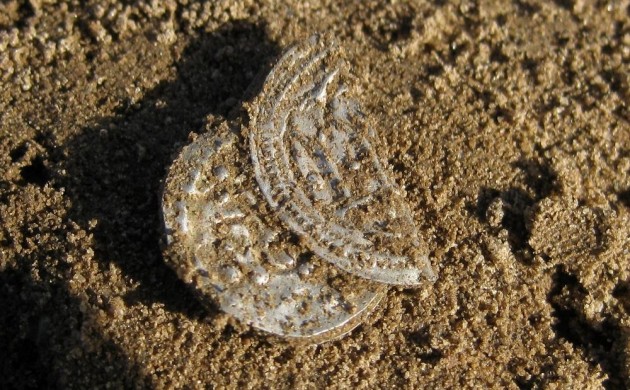
In today’s parable Our Lord teaches us to unearth our talents and make at least a minimal effort to put them to good use. It’s true that in the parable the servants receive their talents and one decides to bury them, but in real life Our Lord has created us with many talents that we can employ if we discover them. In the Last Supper he reminded his disciples that they were to bear fruit as the best way of glorifying the Father (see John 15). How do we give the Lord a return on his investment in us?

We mustn’t let fear keep us from taking risks in Our Lord’s service. As the unfortunate servant found out today, he was so rattled about what he thought were his master’s expectations that he made the wrong move. He was so foolish that the simple steps he could have taken were far from his thoughts. Who knows how things would have turned out if he had simply asked his master for suggestions.

We too must ask the Lord to help us unearth our talents and teach us the best way to use them. As he reminds us today, everyone has talents and is expected to use them. Let’s get to work. Even a little effort goes a long way in Our Lord’s service.

Readings: 1 Thessalonians 4:9–11; Psalm 98:1, 7–9; Matthew 25:14–30. See also 21st Week in Ordinary Time, Saturday, Year II.

21st Sunday in Ordinary Time, Cycle A

Even today there are lots of opinions on who Jesus is or who he was, but today’s readings remind us that the most important opinion is our own: who do I say that Christ is?

Today’s First Reading shows the contrast between the faithful steward entrusted with the keys to everything and the steward stripped of them due to his infidelity. The palace to which Isaiah refers today is the royal palace, an important responsibility. The master of the palace, a steward, represented the king’s interests in many ways and in the king’s name. When Isaiah refers to the house of Judah and the House of David he is referring to much more than a building: he is referring to the royal family and the kingdom. A good steward to the king serves him, his family, his servants, and his people. This level of responsibility brings an incredible pressure from all sides trying to curry the steward’s favor or bring about his downfall. It requires a solid acknowledgement on his part of who is truly in charge: the king. We don’t know what Shebna did to get fired, but Isaiah sees in Eliakim a man who will stand firm in his service to all. This reading is a Scriptural foundation for the Church’s faith on what it meant to have Christ, Our King, entrust the keys of the kingdom of Heaven, his keys, to Peter and his successors.

In today’s Second Reading St. Paul reminds us that an even greater treasure and responsibility has been entrusted to Peter and his successors. God came in Person in his son to reveal the treasures of Our Father: “the riches and wisdom and knowledge of God.” The Church has faithfully watched over this treasure through the centuries, but not just collectively. Our Lord entrusted Peter and his successors with what we call today the deposito fidei: the deposit of faith. Our treasure is the truth about God, about who Our Lord is and what he said and did, about the path to holiness and happiness. The greatest treasure the Church watches over and communicates is the truth about who Jesus is.

In today’s Gospel Our Lord starts quizzing his disciples about the rumor mill regarding him, but then hits them with a pop quiz. Who did people think Our Lord was? Simply a prophet, and, for most, not even a new prophet: one back from the dead. Little did the disciples realize as they rattled off the theories that they’d have to answer for themselves too. Peter taught us how we should respond to the question: “You are the Christ, the Son of the living God.” Peter’s profession of faith in today’s Gospel was bolstered by grace, not just his own sleuthing. The Father revealed something about his Son in Peter’s response, and Peter’s faith should be our faith. Peter’s faith in Christ was rewarded by Christ’s trust in him. Just as Eliakim was entrusted with the keys to all the House of David’s possessions, Peter was entrusted with the keys to the kingdom of Heaven. Our Lord promised him that the gates of the netherworld would not prevail against the Church that the Lord would found upon him as the Rock.

Who is Christ to you? If your response lacks any element of Peter’s response it is time to reexamine and deepen your faith.

Readings: Isaiah 22:19–23; Psalm 138:1–3, 6, 8; Romans 11:33–36; 16:13–20.

20th Sunday in Ordinary Time, Cycle A

In today’s readings we see an apparently harsh encounter turn into a lesson of humility and faith that points the way to the manner in which we, the People of God, are not just united in blood lineage, but by faith. The People of God were not called to embrace all nations overnight, but gradually.

In today’s First Reading Isaiah reminds us that the people of Israel, gathered into one nation and worshipping in the Temple on the “holy mountain” were just phase one of God’s desire to be the God of all nations. To Isaiah’s first listeners the foreigners had no chance of inheriting the blessings or the promises offered to the people of Israel by the Lord. Through the prophet the Lord reveals that through their fidelity and worship other peoples, “foreigners” would be drawn to the Lord and be considered worthy to come to him in worship together with the Israelites. Even in Our Lord’s earthly time non-Israelites had a place in the Temple if they feared the Lord, called the court of the Gentiles. They could observe, but not participate more closely in worship.

In today’s Second Reading Paul laments that, while the Gentiles (non-Israelites) had believed and accepted the Gospel, so many of his brother Israelites (Jews) had not, despite all the Lord had given them. Paul himself at first did his ministry among the Jews, and was frustrated by their rejection of the Gospel. Based upon those experiences and as he worked to spread the Gospel he realized that the Lord had called him to be the apostle sent to the Gentiles, a mission not carried out during Jesus’ earthly life. In Jesus’ time a smattering of Gentiles came to him, not the other way around. Paul tries to explain today that the Jews’ loss was the Gentiles’ gain. Israel had been called to first receive the Gospel, with mixed results, but the Gentiles did accept the Gospel, even though they’d not been prepared for it like the Jews had been.

In today’s Gospel on face value it seems Our Lord is being very harsh with the Canaanite woman, but he is actually showing what an expert reader of hearts he is. There was bad blood between the Israelites and the Canaanites: the first generation of Israelites were so scared of them that they didn’t enter the Promised Land and continued to journey in the desert for forty more years.

Jesus is not just being driven by the prejudices of his time: when the Centurion asked him for help, another pagan, he didn’t hesitate (see Matthew 8:5–13). Jesus during his earthly ministry concentrated on the Jewish people; later his Apostles and disciples would bring the Gospel beyond the confines of Judaism, as is narrated in the Acts of the Apostles. Therefore the conversation with the Canaanite woman is very similar to the Wedding Feast at Cana when Mary asked him to do something about the wine situation and he said, “my hour has not yet come” (see John 2:4).

The Canaanite woman in today’s Gospel shows a lot of courage in the quest to free her daughter from being afflicted by a demon. Our Lord was a Jew, but also a miracle worker, so she decided to try. In her first attempt to greet Our Lord she even used the Messianic title, “Son of David”: for the people of the time it was not clear that the Messiah would be a good thing for anyone who was not a Jew. Perhaps she was trying to butter him up a little. Our Lord responds as she probably expected: the cold shoulder. However, we know Our Lord can read hearts, so this was not a simple brush off; something more profound was going on.

When the disciples pressed him regarding the matter, he told them it was not yet time for his ministry to go beyond the children of Israel. Israel had a special role in the plan of salvation and Our Lord was sent to attend to them; the rest would be attended to later. In a sense, the Canaanite woman was trying to skip the line. When Our Lord rebuffs her again she is not shy about acknowledging that she is not entitled to what she is requesting.

Sometimes we forget that Our Lord doesn’t have to give us anything. Yet Our Lord rewards her faith and humility in the end. Our Lord is having this conversation in front of all his disciples so that they could see that even someone who’d not been prepared to believe could believe. Like his response to Mary in the Wedding Feast at Cana, here he was inviting the Canaanite woman to offer something more: greater faith and humility. The Canaanite woman rose to the occasion and Jesus congratulated her on her faith and healed her daughter, not only to her benefit but to that of the disciples as well.

Our Lord rebuffed the Canaanite woman twice. How many of us would have stomped off fuming after being treated that way? She is not shy about acknowledging that she is not entitled to what she is requesting, and she is rewarded in the end for her faith and humility. Sometimes we forget that Our Lord doesn’t have to give us anything. He has given us everything we need, but not always what we might have wanted. Didn’t our parent do the same many times, especially in those moments when we were immature and selfish about what we wanted? Let’s ask Our Lord for what we need, thankful that he’ll consider our petition and humble enough to recognize that we aren’t entitled to it.

Readings: Isaiah 56:1, 6–7; Psalm 67:2–3, 5–6, 8; Romans 11:13–15, 29–32; Matthew 15:21–28.

19th Week in Ordinary Time, Saturday, Year I

Today’s First Reading is a concluding testament of Joshua as the Israelites settle in the Promised Land. When they renew their commitment to serve the Lord and leave other gods behind, including the gods of the peoples the Lord displaced on their behalf, Joshua sets up a stone in memorial of the pledge the people of Israel made to serve the Lord. Imagine the years passing by as they saw that stone and remembered how faithful or unfaithful they were. Joshua warned them before they pledged their devotion to the Lord that it would not be easy.

Have you ever returned to the fount where you were baptized? Like the Israelites it is thanks to generations of Christians who preceded us, especially our family, that we were baptized and became members of the People of God, set on the path toward our Promised Land in Heaven. Not only the Church’s monuments and cultural achievements remind us of what the Lord has done for us, but the existence of the Church herself, not just as buildings and institutions, but as a People of believers.

In an ever-secularizing society we need these reminders of what the Lord has done for us, and for those we love. Let’s make Joshua’s pledge today our own: “As for me and my household, we will serve the Lord.”

Readings: Joshua 24:14–29; Psalm 16:1–2a, 5, 7–8, 11; Matthew 19:13–15. See also 19th Week in Ordinary Time, Saturday, Year II.

19th Week in Ordinary Time, Monday, Year I

Moses in today’s First Reading reminds the Israelites as they prepare to enter the Promised Land how privileged they are to have been chosen and blessed by the Lord. Everything in creation belongs to the Lord, yet the People of Israel are a prized possession. In other moments of the Old Testament the Lord has promised to be as a father to Israel, and we know now that in the Lord’s eyes we are far more than a prized possession; we are his cherished sons and daughters.

The Lord is not only perfectly impartial, he is also perfectly compassionate, and Moses invites the Israelites to do the same, reminding them of everything the Lord has done for their ancestors to lead them to this moment. Long before the new Pharaoh enslaved them in Egypt they were a small group invited by their brother Joseph to settle in Egypt, and now, at the threshold of the Promised Land, they are a numerous nation, just as the Lord had promised to the Patriarchs. Through Baptism we form part of the new People of God, a people of faith, hope, and charity spread throughout the world for no other reason than Our Lord’s compassion toward us.

It’s salutary to count your blessings once in a while. Ask the Lord to help you today to see all the blessings he has given you.

Readings: Deuteronomy 10:12–22; Psalm 147:12–15, 19–20; Matthew 17:22–27. See also 19th Week in Ordinary Time, Monday, Year II.